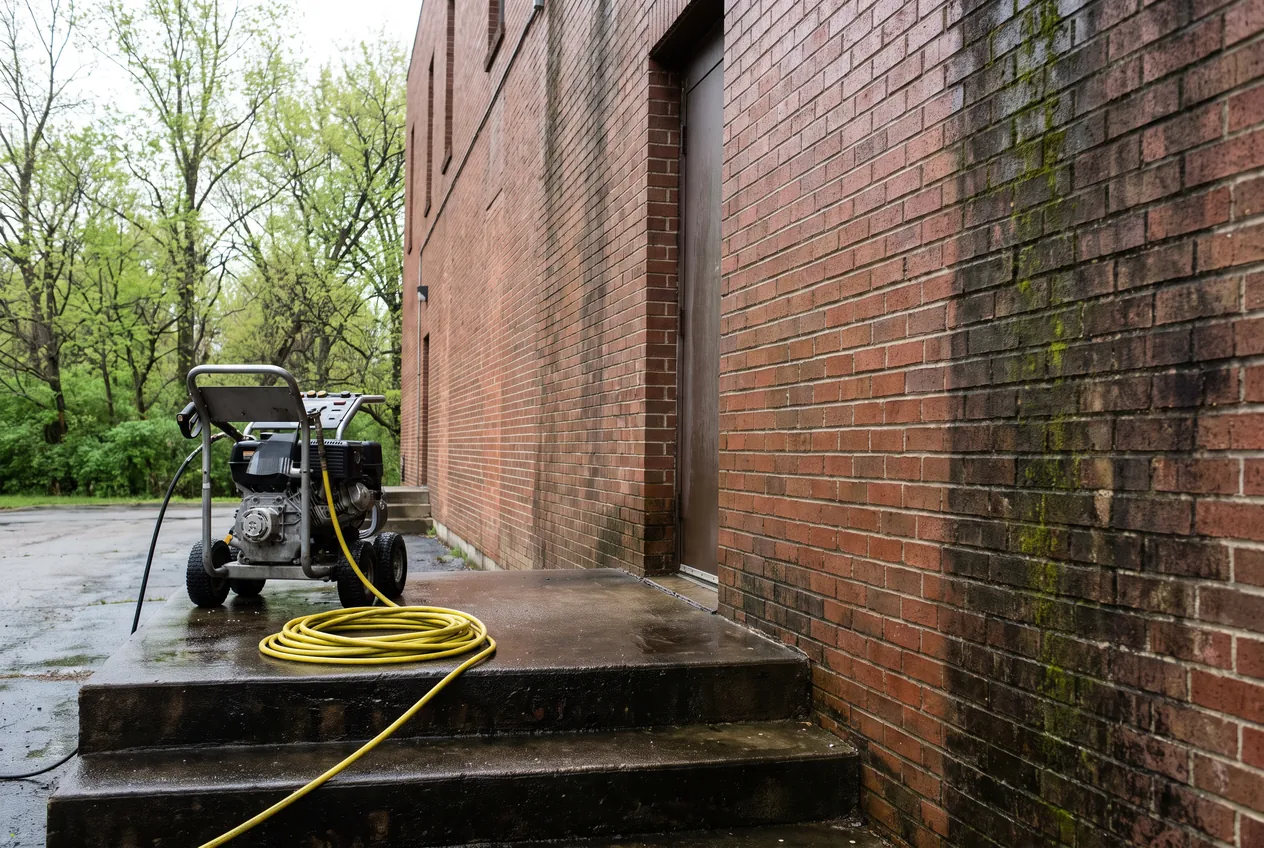
On a typical visit the crew starts with a walk of the site to mark drains, outlets, light fixtures and anything else that should stay dry, then covers them. Flat concrete such as sidewalks and entry plazas is cleaned with a rotary surface cleaner, a spinning bar under a hood that cleans in even passes and avoids the striped look a wand leaves behind. Hot water is used where grease, oil or old gum has built up, since cold water mostly moves those around. Walls, awnings and signs are washed from the top down so dirty water does not run across work already finished.
Not every surface should see high pressure. Painted block, stucco, vinyl siding, wood trim and fabric awnings are usually soft washed, meaning a detergent is applied at low pressure, allowed to sit, and rinsed gently. Blasting those materials can etch the surface, strip paint, drive water behind siding or past window seals, and splinter wood. Runoff is the other thing to understand. Wash water carrying soap, oil and grime generally cannot be sent into storm drains under local stormwater rules, so ask how the crew handles it: blocking drains, recovering water with a vacuum unit, or sending it to an approved discharge point.
The most common mistake is hiring on price alone without asking what the crew will do with wash water or whether the contractor carries liability insurance. Proof of coverage is a fair thing to request before anyone sets up on your property. Another mistake is booking the whole site for one window and leaving no usable entrance; a good plan works section by section, with signs at any door where the ground is still wet. Waiting too long also costs more, because gum, oil stains and dumpster residue that sit for a full season take extra passes. Finally, confirm in writing which surfaces are in scope.
Pressure washing for Louisville businesses through wet winters and humid summers
Louisville's wet, cold winters and humid summers put mud and moisture at business entrances for much of the year, and that grime ends up on sidewalks, entry steps and the lower part of storefronts. Outdoor washing is usually paused when temperatures sit near freezing, because water left on a walkway can turn to ice before morning. That makes spring the natural time to wash off the winter salt, mud and residue that collected at the door. Older buildings downtown often have woodwork and painted trim near their entrances, which calls for soft washing rather than a high-pressure wand.
Storefront sidewalks in St. Matthews and The Highlands are usually washed early in the morning so the concrete is dry when customers arrive. Warehouse and logistics properties near the airport tend to ask for loading docks and dumpster pads on a recurring basis, while office parks in Hurstbourne, Middletown and Jeffersontown often want entrances and walks done on a weekend. Properties across the river in New Albany and Jeffersonville follow the same seasonal pattern, with the biggest wash of the year booked once spring settles in.
What changes the price of commercial pressure washing in Louisville
- Surface area and type
- Square footage of concrete, the height of walls and the mix of surfaces all matter. A large open lot goes faster per foot than narrow walks, stairs and corners that need hand work.
- Staining and buildup
- Oil spots, gum, rust marks and a full winter of grime take hot water, pretreatment and extra passes. Sites washed on a regular schedule usually need less work per visit.
- Water handling
- Recovering wash water, blocking drains or taking it to an approved discharge point adds equipment and time. Sites near storm drains or on sloped lots often need more of it.
- Timing and access
- Overnight, early morning and weekend work, a water source on site, lift access for high walls and how many sections must stay open during the job all affect the quote.
How a typical pressure washing schedule is laid out
| What gets done | How frequently |
|---|---|
| Dumpster pads and enclosures | Monthly, or more often in summer |
| Drive-thru lanes | Monthly to quarterly |
| Entrance sidewalks and steps | Quarterly, plus a spring wash |
| Loading docks | Every few months at busy facilities |
| Storefronts and awnings | A few times a year |
| Building exterior soft wash | About once a year, or as needed |
| Parking garage decks | Once or twice a year |
Think of this as a sensible place to begin rather than a set plan, since the provider will fine-tune it after walking through your space and hearing how your staff make use of it.
What the service typically covers
- Covering outlets, lights and sensitive fixtures
- Rotary surface cleaning of flat concrete
- Hot water treatment for grease and gum
- Soft washing of painted walls and awnings
- Drain blocking and wash water recovery
- Wet-area signage at open entrances
- Top-down rinse of signs and storefronts
- Walkthrough of the finished areas
You and the provider settle the specific tasks and timing together when they prepare a quote for your space.
Neighborhoods we hear from
Businesses throughout the Louisville area send us pressure washing requests, from Downtown Louisville, St. Matthews, The Highlands, Jeffersontown, Middletown, Hurstbourne and beyond. See all areas.
More cleaning services in Louisville
- Commercial Cleaning in Louisville
- Office Cleaning in Louisville
- Janitorial Services in Louisville
- Medical Office Cleaning in Louisville
- Floor Care in Louisville
- Post-Construction Cleaning in Louisville
- Day Porter Services in Louisville
- Commercial Carpet Cleaning in Louisville
- Commercial Window Cleaning in Louisville
- Disinfection Services in Louisville